


Rugby union betting would be painfully straightforward if every match featured evenly matched teams. In reality, the sport delivers everything from brutal mismatches to nail-biting clashes decided by a single penalty kick. This disparity creates a problem for bettors: backing a heavy favorite at 1.05 odds yields almost nothing, while the underdog at 15.00 feels like throwing money into the wind. Handicap betting exists precisely to solve this dilemma, and understanding how it works separates casual punters from those who consistently find value in rugby markets.
The concept itself is elegantly simple. Bookmakers apply a hypothetical points adjustment to one team, creating a more balanced betting proposition. Instead of asking whether New Zealand will beat Namibia, the question becomes whether the All Blacks will win by more than 50 points. Suddenly that one-sided affair becomes a genuine betting puzzle requiring analysis, research, and judgment. Welcome to the world of rugby handicap betting, where the margins matter as much as the results.
This guide breaks down every aspect of handicap betting in rugby union. You will learn the different types of handicaps available, how to read the odds, when each format offers the best value, and which mistakes consistently trip up even experienced bettors. By the end, handicap markets will feel less like mathematical abstractions and more like opportunities waiting to be exploited.
What Is Handicap Betting in Rugby?
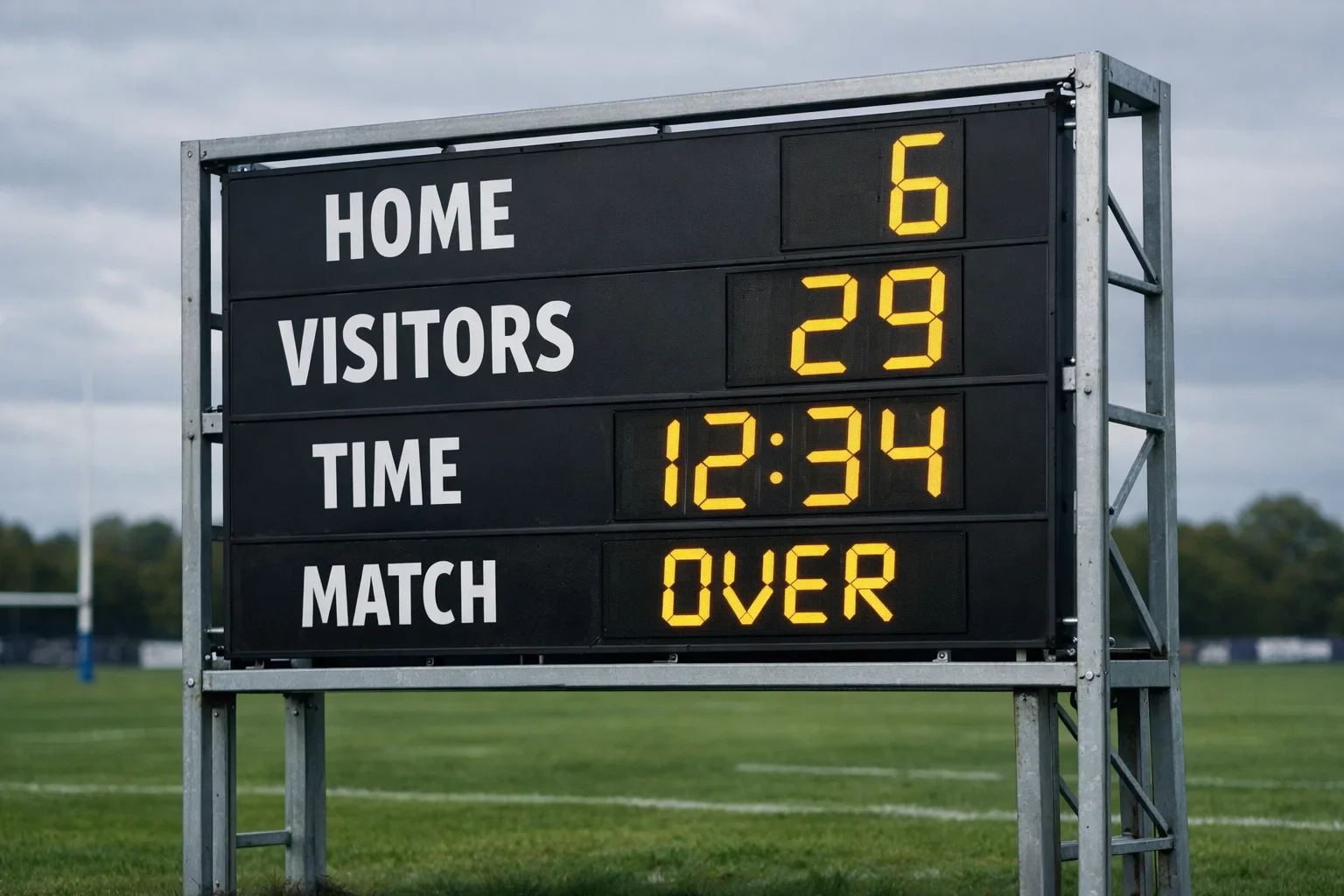
Handicap betting applies a virtual points advantage or disadvantage to a team before the match begins. The result that matters for your bet is the actual score plus or minus this handicap adjustment. If you back a team at -7.5 and they win by eight points or more, you win. If they win by exactly seven or fewer points, you lose. The handicap creates an artificial scoreline that determines the outcome of your wager.
Bookmakers set handicap lines based on their assessment of the likely margin between two teams. They analyze historical results, current form, home advantage, player availability, and dozens of other factors to establish a line they believe represents fair value. A handicap of -14.5 for Ireland against Italy, for example, suggests the bookmaker expects Ireland to win by roughly two converted tries plus a conversion. Your job as a bettor is to determine whether that line accurately reflects reality or whether it presents an opportunity.
The fundamental appeal of handicap betting lies in value creation. Match winner markets often offer poor returns on favorites and unrealistic prices on underdogs. Handicaps transform these lopsided propositions into closer to 50-50 scenarios with odds typically hovering around 1.90 to 1.95 on each side. This levels the playing field and forces you to engage with the likely margin of victory rather than simply picking who wins.
Rugby union lends itself particularly well to handicap betting because of the sport’s scoring structure. Points come in chunks of three (penalties and drop goals), five (tries), and seven (converted tries). This creates natural break points in scorelines and makes margin assessment more structured than in sports where single points accumulate gradually. Understanding typical rugby scorelines helps you evaluate whether a handicap line sits in a vulnerable or protected position.
Types of Rugby Handicap Bets
European Handicap (3-Way)

The European handicap, sometimes called the three-way handicap, retains the possibility of a draw after the handicap is applied. This format uses whole numbers rather than half-points, meaning the adjusted scoreline can finish level. When you encounter a -7 European handicap, you are betting that your team wins by more than seven points. If they win by exactly seven, the handicap-adjusted result is a draw, and neither side wins the bet. Bookmakers offer separate odds on the draw outcome, creating three possible results to wager on.
This format tends to offer higher odds on the handicap because the draw outcome reduces each selection’s probability. Backing a team at -7 European handicap might pay 2.10, whereas the same line as an Asian handicap would pay 1.90. The trade-off is clear: higher potential returns come with the risk of losing to the draw. European handicaps suit bettors who have strong conviction about the margin and want to maximize returns when correct.
Understanding when draws become likely requires knowledge of rugby’s scoring system. A seven-point handicap is particularly vulnerable because converted tries are worth exactly seven points. A team leading by 14 that concedes a late try lands precisely on the dangerous number. Similarly, handicaps of 3, 10, 14, and 21 align with common scoring combinations and carry elevated draw risk. Savvy bettors factor this into their analysis when comparing European handicap prices to other formats.
Asian Handicap (2-Way)
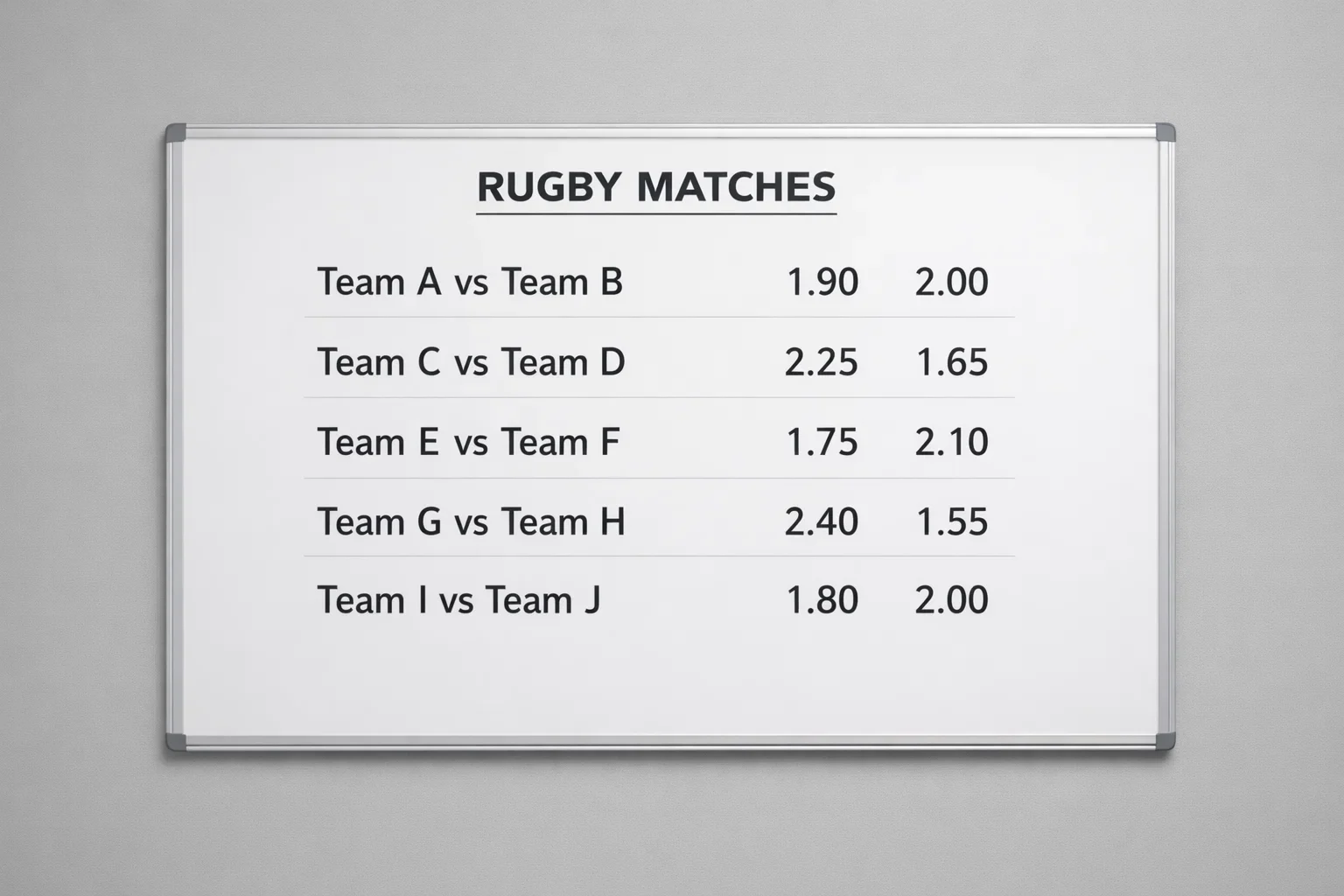
Asian handicaps eliminate the draw possibility entirely by using half-point lines. A handicap of -7.5 has no middle ground: either the team wins by eight or more, or they fail to cover. This binary outcome simplifies betting and appeals to those who want clear win-or-lose propositions. You will not find yourself in the frustrating position of watching your selection win by the exact handicap margin only to receive your stake back.
The half-point system creates decisive outcomes but typically offers lower odds than European equivalents. Bookmakers know they cannot lose to a draw, so they price Asian handicaps more tightly. Odds of 1.90 to 1.95 are standard, with the bookmaker’s margin built into that small gap below 2.00. For many bettors, the certainty of a definitive result outweighs the slightly reduced prices.
Asian handicaps also include quarter-point lines that split your stake across two handicaps. A bet on -7.25 places half your stake on -7 and half on -7.5. This creates four possible outcomes: win both, win one and push the other, push one and lose the other, or lose both. Quarter-point handicaps offer intermediate positions between the whole numbers and appeal to bettors who want partial protection against specific margins. These lines see more action in Asian markets but are available through most major international bookmakers.
Alternative Handicaps
Alternative handicaps give bettors the freedom to choose their own line rather than accepting the bookmaker’s primary offering. Instead of taking Ireland at -14.5 against Italy, you might prefer -7.5 for lower risk and lower odds, or -21.5 for higher risk and higher returns. This flexibility lets you align the bet with your specific view of how the match will unfold.
The pricing relationship between alternative lines follows predictable patterns. Each point adjustment changes the odds roughly proportionally, though the exact relationship depends on how the bookmaker models the distribution of likely margins. Moving from -14.5 to -7.5 might shift odds from 1.90 to 1.45, while moving to -21.5 could push them to 2.50. Shopping across different bookmakers for alternative lines can uncover significant price variations, particularly on less popular matches where books have taken less action.
Alternative handicaps prove especially useful when you disagree with the market assessment but find the primary line unappealing. Perhaps you believe Ireland will dominate Italy but see -14.5 as sitting on a dangerous number given Italy’s improved scrum. Taking -7.5 accepts lower odds but protects against a single try margin making the difference. Conversely, if you expect a complete blowout, pushing to -21.5 or beyond captures better value for your conviction. The key is matching your confidence level to the appropriate line.
How to Read Rugby Handicap Odds
Reading handicap odds becomes intuitive once you understand the notation conventions. Positive handicaps indicate the underdog receiving a head start. A handicap of +10.5 means that team starts with a virtual 10.5-point lead; they cover if they lose by fewer than 11 points, draw, or win outright. Negative handicaps apply to favorites who must win by more than the stated margin. At -10.5, the favorite needs to win by 11 or more points for backers to collect.
Calculating potential returns works identically to any other betting market. Multiply your stake by the decimal odds to find the total return including stake. A 50-unit bet on -7.5 at odds of 1.91 returns 95.5 units if successful, for a profit of 45.5 units. The odds themselves reflect the bookmaker’s implied probability for each outcome, typically set near 52-53% per side to build in their margin. Odds of 1.91 imply roughly 52.4% probability, while 1.90 implies approximately 52.6%.
Line movements provide valuable information about where sharp money is flowing. If a handicap opens at -10.5 and moves to -7.5, significant money has come in on the underdog plus the points. This could reflect injury news, weather changes, or simply professional bettors identifying value on one side. Tracking line movements helps you understand market sentiment and potentially spot opportunities before prices adjust fully. Opening lines deserve particular attention because they represent the bookmaker’s initial assessment before public money distorts the picture.
Different bookmakers may offer different handicap lines on the same match, and these discrepancies create opportunities for line shopping. One book might offer the favorite at -7.5 while another has -6.5 on the same team. If you want to back the favorite, the -6.5 option provides a full point of cushion at potentially similar odds. Maintaining accounts with multiple bookmakers and comparing lines before each bet consistently improves your long-term results.
When to Use Handicap Betting
Heavy Favorites
Matches featuring heavy favorites represent the classic handicap betting scenario. When New Zealand faces Namibia, Japan, or another tier-two nation, match winner odds offer no value whatsoever. The All Blacks might be priced at 1.01, meaning you risk 100 units to win a single unit. Even if New Zealand wins 99 times out of 100, that single loss wipes out years of accumulated profit. Handicap markets transform these mismatches into engaging betting opportunities by asking the right question: not whether the favorite wins, but by how much.
Handicap lines for these matches stretch into dramatic territory. Spreads of 40, 50, or even 60 points appear when top-tier nations face emerging rugby countries. Analyzing these lines requires understanding how motivation, substitution patterns, and scoreboard effects influence late-game behavior. A team leading by 45 points at 60 minutes might coast to the finish rather than piling on additional scores. Coaches often use blowouts to test depth players, which can slow scoring rates dramatically in the final quarter. See also how spreads work.
Tournament context matters enormously for heavy favorite handicaps. World Cup pool stages feature bonus points for winning by certain margins or scoring specific numbers of tries. Teams chasing these incentives attack differently than teams resting players ahead of knockout rounds. A 2019 World Cup pool match might see Australia pushing aggressively for a four-try bonus, while a 2027 dead rubber could feature wholesale changes and conservative game management. Adjusting handicap analysis for contextual factors separates profitable bettors from those who apply one-size-fits-all thinking.
Close Matches
Handicap betting creates value opportunities even in tightly contested matches between comparable teams. When two Six Nations rivals meet with match winner odds of 1.80 and 2.10, the handicap market might offer -2.5 or -3.5 on the favorite. Now you are not just asking who wins but whether the favorite’s margin reaches a converted try or stays closer. This subtle shift in framing can reveal market inefficiencies invisible in the match winner market.
Slight underdogs with small positive handicaps often represent excellent value positions. Taking England at +3.5 against Ireland means you win if England wins outright, draws, or loses by three points or fewer. You are essentially backing England to be competitive while giving yourself insurance against a narrow defeat. The psychological comfort of not needing an outright win helps some bettors assess these markets more objectively than when facing the binary win-lose pressure of match results.
Close match handicaps hinge on late-game scenarios where a single score determines the outcome. Rugby matches frequently see teams trading leads in the final 20 minutes, with the eventual margin depending heavily on which side holds possession as time expires. Analyzing closing ability, set-piece reliability under pressure, and kicking game execution helps predict whether close matches break toward favorites or underdogs in those decisive moments.
Tournament Betting
Tournament rugby creates unique handicap betting dynamics that differ substantially from regular season or standalone test matches. Knockout stage psychology, accumulated fatigue, and schedule inequities all influence margins in ways that regular form analysis might miss. Teams playing their third match in 10 days while their opponent enjoyed six days of rest face compounding disadvantages that may not fully reflect in handicap lines.
Pool stage mathematics can transform meaningless matches into tactical curiosities. A team already eliminated might blood young players and accept defeat gracefully, inflating margins beyond what competitive matches would produce. Alternatively, teams with nothing to play for occasionally produce their best performances, freed from pressure and expectation. Reading team statements, analyzing squad selections, and understanding national rugby cultures helps predict which dead rubber scenario will materialize.
Quarterfinals and semifinals historically produce tighter margins than pool stages or finals. The do-or-die nature encourages conservative tactics, particularly from underdogs who sense opportunity. Teams protect leads rather than extending them, and trailing teams focus on one-score deficits rather than accepting blowout losses. Handicap lines that work well in free-flowing pool play may overshoot consistently in the pressure-cooker environment of knockout rugby.
Rugby Handicap Betting Strategies

Developing a systematic approach to handicap betting improves consistency and helps identify genuine value. Start by establishing your own margin prediction before looking at the bookmaker’s line. If you independently assess a match as likely to produce a 12-point favorite victory, and the bookmaker offers -7.5, you have identified potential value on the favorite. If they offer -17.5, the value sits with the underdog. This process insulates your thinking from anchoring bias created by seeing the line first.
Historical margin data provides the foundation for handicap analysis. Rugby produces surprisingly consistent patterns in scoring differentials between tiers of teams, home and away performances, and tournament formats. The average Six Nations match might produce a 10-point margin, while Super Rugby fixtures average 15 points. Understanding baseline expectations for different competitions calibrates your predictions appropriately.
Weather analysis directly impacts margin projections. Wet conditions reduce scoring, suppress big margins, and favor teams with strong forward packs and kicking games. A match expecting heavy rain should see your margin projection compress toward zero regardless of the quality differential between teams. Conversely, dry, fast conditions tend to amplify talent differentials and produce larger margins as superior attacking teams exploit space more effectively.
Set-piece dominance correlates strongly with margin size. Teams that dominate scrums and lineouts control possession, field position, and penalty counts in ways that compound throughout matches. A team conceding four or five scrum penalties faces not just the points from those penalties but the territorial pressure and attacking platforms they create. Analyzing set-piece matchups provides margin insight that pure try-scoring form might miss.
Common Handicap Betting Mistakes
The most pervasive mistake in rugby handicap betting is overestimating the margins that top teams produce against weaker opponents. Casual bettors see New Zealand playing Tonga and assume a 60-point victory because the All Blacks can theoretically score at will. Reality intervenes through rotation, pacing, and the natural tendency to ease up with big leads. Actual margins frequently fall short of public expectation, creating systematic value on underdogs in heavy mismatch scenarios.
Ignoring contextual factors leads to preventable losses. A team that clinched their pool with a match to spare faces vastly different incentives than one fighting for bonus points to secure progression. International windows at the end of brutal domestic seasons feature exhausted players who underperform expectations. Tour matches in the Southern Hemisphere against fatigued traveling teams produce unusual results. Bettors who apply form-based analysis without contextual adjustment consistently misread these situations.
Chasing specific margins rather than ranges represents another costly error. Convincing yourself that a match will produce exactly a 14-point margin and betting accordingly ignores the inherent variance in rugby outcomes. Converted tries, penalty decisions, and injury-time events create significant outcome variability around any central expectation. Thinking in probability distributions rather than point predictions aligns your betting approach with statistical reality.
Overreacting to recent results distorts handicap judgment. A team that lost by 30 points in their previous match might face an overcorrected line the following week, creating value on their side. Similarly, a team fresh off a dominant victory might be priced as if they will repeat that performance indefinitely. Regression to the mean affects rugby as surely as any other sport, and lines that fully price in recent extremes often overcorrect.
Handicap Betting Examples
Consider a 2026 Six Nations match between France and Scotland at the Stade de France. France enters as the favorite with match winner odds of 1.40, while Scotland sits at 3.00. The handicap opens at France -10.5 with both sides priced at 1.90. How should you analyze this proposition?
France’s home record in the Six Nations shows an average winning margin of 14 points over the past decade. Scotland’s away form in Paris specifically has been poor, with their last three visits producing losses of 17, 21, and 12 points. Weather forecasts predict dry conditions favoring France’s expansive attacking style. Scotland arrives with three key players returning from injury, suggesting potential cohesion issues in their first competitive outing together. Historical analysis, conditions, and squad factors all point toward France covering -10.5 with reasonable confidence.
Now examine a Rugby Championship fixture between New Zealand and Argentina in Wellington. The All Blacks open at -14.5 following consecutive home victories of 28 and 35 points. Argentina, however, arrives on a three-match winning streak including an away victory in Australia. The Pumas have beaten New Zealand twice in the past five meetings, both times when entering with momentum. Weather forecasts show wind warnings that will compromise New Zealand’s expansive game plan. Sharp bettors might identify +14.5 as value despite the All Blacks’ recent dominant home form.
A World Cup pool stage match between Ireland and Romania illustrates the mismatch handicap scenario. Ireland opens at -47.5 as they push for maximum bonus points in their final pool match. Romania has lost their previous two matches by 38 and 44 points against weaker opposition than Ireland. However, Ireland has already secured the pool top spot, coach Andy Farrell has announced wholesale changes to rest key players, and Romania traditionally raises their game against top nations while losing heavily to mid-tier opponents. The -47.5 line sits at the upper end of Ireland’s likely margin range, making Romania +47.5 a value consideration despite the quality gap.
Building Your Handicap Betting Approach

Success in rugby handicap betting requires combining quantitative analysis with qualitative judgment. Build a database tracking your predictions against actual outcomes to identify systematic biases in your thinking. Perhaps you consistently overestimate certain teams or misjudge specific tournament formats. This feedback loop accelerates improvement and transforms intuition into calibrated judgment.
Line shopping across multiple bookmakers captures significant value over time. A half-point difference on a handicap line might seem trivial but translates directly into wins that would otherwise be losses. Professional bettors consider line shopping as essential as match analysis itself. Opening accounts with at least four or five reputable bookmakers provides sufficient coverage to find the best available price on most markets.
Specialization beats generalization in handicap betting. Developing deep expertise in one competition, whether the Six Nations, Super Rugby, or European Champions Cup, allows you to identify value invisible to generalist bettors and bookmakers. You will recognize scheduling traps, understand rivalry dynamics, and anticipate tactical adjustments faster than those spreading attention across dozens of competitions. Pick your niche and own it completely.
Record keeping transforms hobby betting into serious analysis. Track every bet including your pre-bet reasoning, the line you took, the odds obtained, and the actual outcome. Reviewing this record reveals patterns in your decision-making, highlights markets where you excel, and exposes persistent weaknesses demanding attention. The discipline of recording forces clarity of thought before each bet and accountability afterward.
Handicap betting rewards patience and selectivity. Not every match offers value, and forcing bets on unfavorable lines steadily erodes bankrolls. Waiting for situations where your analysis strongly contradicts market pricing, rather than betting for entertainment, distinguishes profitable bettors from recreational players. When handicap value appears, bet with appropriate confidence; when it does not, watch without wagering and accept that discipline produces better returns than action. Rugby handicap on rugby union betting.
Rugby union handicap betting offers intellectual engagement beyond simple match predictions. Mastering the formats, understanding when each applies, developing margin prediction skills, and avoiding common errors creates genuine advantage in betting markets. The points spread transforms lopsided mismatches into puzzles worth solving and close matches into precision exercises. Whether backing favorites to dominate or underdogs to stay competitive, handicap betting puts your analytical abilities directly against the bookmaker’s line-setting algorithms. Make your judgments count.
