

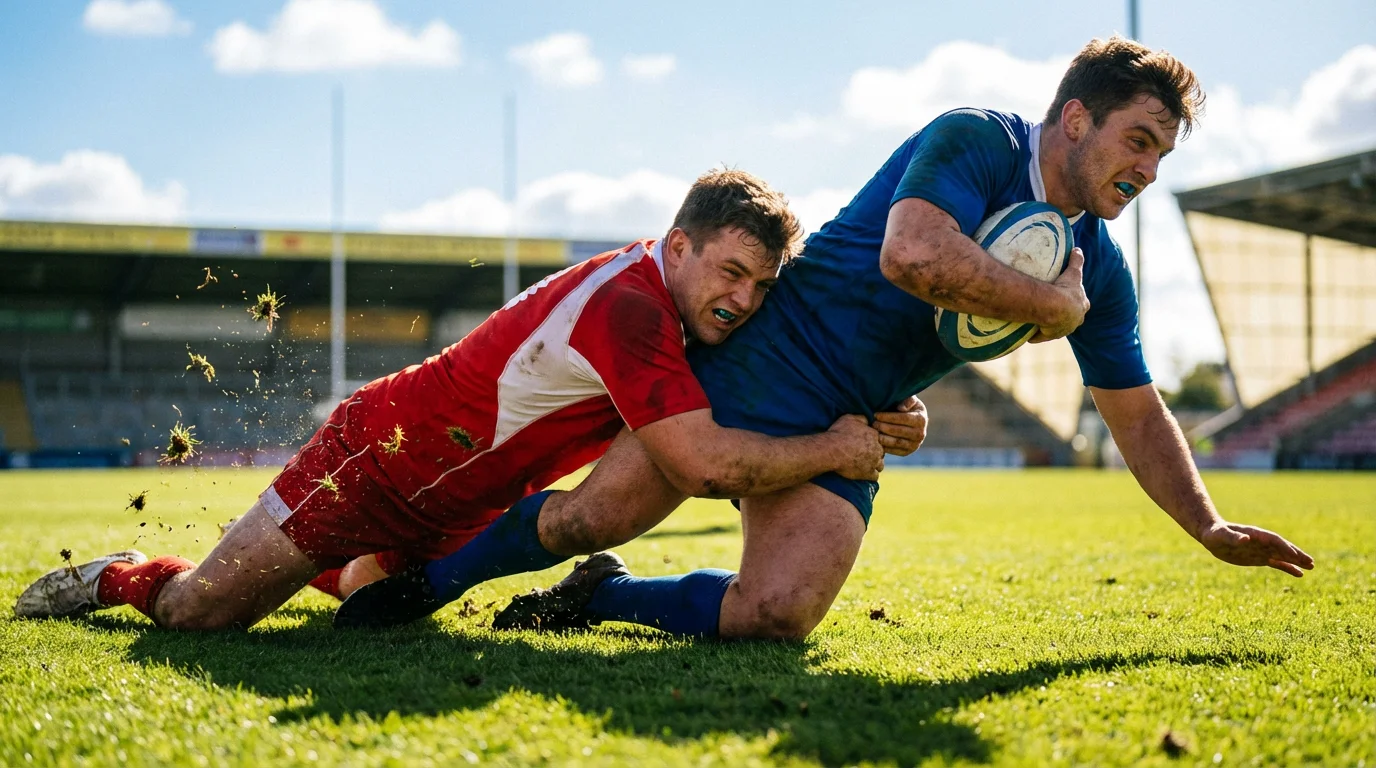
Super Rugby Pacific is the southern hemisphere’s premier club competition, and it plays by different rules than anything you will find in the north. The rugby is faster, the defences more aggressive, the scorelines higher, and the travel demands more extreme. From Auckland to Sydney, from Suva to Melbourne, this is a competition where a team might fly five hours on a Wednesday, train on a Thursday, and play on a Saturday — and the betting market does not always account for what that does to performance. If you know where to look, Super Rugby Pacific offers some of the most exploitable inefficiencies in professional rugby union.
Competition Format and Betting Landscape
Super Rugby Pacific in its current configuration features eleven teams: five from New Zealand, four from Australia, Moana Pasifika, and Fijian Drua. The Melbourne Rebels were axed at the end of the 2024 season, reducing the competition from twelve to eleven teams. The regular season runs from February to June, with the top six qualifying for a three-week finals series. Unlike the URC, every team plays every other team at least once, which provides a more balanced dataset for form assessment but introduces significant travel variation across the fixture list.
The betting landscape for Super Rugby Pacific is thinner than for the Six Nations or Premiership Rugby. Fewer bookmakers offer comprehensive coverage, the markets are priced later in the week, and the volume of money wagered on individual matches is lower. For the bettor, these conditions are favourable. Lower liquidity means less efficient pricing, and less efficient pricing means more opportunities to find odds that do not accurately reflect the true probabilities.
Match result, handicap, and totals are the standard markets available. Player prop markets — tryscorer, player performance points — are offered by some bookmakers but with wider margins than equivalent markets in northern hemisphere competitions. The best value in Super Rugby Pacific typically sits in the handicap market, where the bookmaker’s assessment of the point spread can be influenced by factors that are easier to quantify than the market acknowledges: travel distance, time zone shifts, squad rotation, and conference form differentials.
The New Zealand versus Australia Dynamic
The central tension of Super Rugby Pacific is the quality gap between New Zealand and Australian franchises. New Zealand teams have historically dominated the competition, though the gap has narrowed in recent seasons. The Crusaders, Blues, and Hurricanes carry the deepest squads and the most consistent coaching structures. Australian sides — the Waratahs, Brumbies, Reds, and Western Force — have been competitive in patches but less reliable over a full season.
For betting purposes, the cross-conference dynamic is where most of the value lies. When a New Zealand franchise travels to Australia, or vice versa, the handicap line reflects the bookmaker’s assessment of both the quality differential and the travel impact. New Zealand sides are typically favoured even when playing away in Australia, and the market is generally correct about this. But the magnitude of the handicap is where disagreements arise.
A Blues side travelling to Sydney to face the Waratahs might be set as 10-point favourites. The question for the bettor is whether that line accounts for the specific circumstances: is it the Blues’ first away trip of the season or their third in four weeks? Have the All Blacks recently released players back to franchise duty, strengthening the Blues’ squad? Are the Waratahs at full strength or missing Wallaby players to national duty? The bookmaker’s model captures some of these factors, but the weighting is imprecise, and a bettor who tracks the details can find the line off by three to five points regularly enough to profit.
Australian derbies — matches between two Australian franchises — produce different betting dynamics. These are often closer affairs than cross-conference matches, and the bookmaker tends to set tighter handicap lines. The value in Australian derbies is more likely to be in totals than handicaps. Australian teams in recent seasons have played a more expansive style than their New Zealand counterparts, and derbies between two attack-minded Australian sides frequently produce totals above 50 combined points. If the bookmaker sets the line based on overall competition averages rather than the specific scoring tendencies of the teams involved, the over can be underpriced.
Travel and Time Zones: The Invisible Handicap
No rugby competition in the world imposes the travel burden that Super Rugby Pacific does. A round-trip from Auckland to Sydney is approximately four and a half hours in the air. Auckland to Suva is over three hours. Perth to Christchurch is nearly seven. These are not occasional long-haul trips — they are routine weekly realities for teams competing across the Australasian and Pacific time zones.
The impact on performance is measurable. Teams playing away from home after crossing two or more time zones win at a lower rate and cover handicap lines less frequently than teams playing local away fixtures. The effect is most pronounced when the travel is eastward, which disrupts circadian rhythms more severely than westward travel. A New Zealand team flying to Perth gains two hours and tends to cope better than an Australian team flying to Auckland and losing two hours.
Smart bookmakers factor travel into their pricing, but the adjustment is often conservative. A blanket home advantage number is applied regardless of whether the visitors flew ninety minutes from Melbourne or seven hours from Christchurch. The bettor who distinguishes between these scenarios — tracking the actual travel distance, direction, and departure time for each fixture — gains an edge that the blunt instrument of a generic home advantage correction misses.
Bye weeks and back-to-back home stands are the flip side of the travel equation. A team coming off a bye week is rested, has had a full week of preparation on their home training ground, and enters the match with a physiological advantage over a team that played last weekend and flew interstate on Tuesday. Bye-week teams in Super Rugby Pacific outperform their pre-bye form at a rate that the market consistently underestimates, particularly when the bye falls during the middle of the season rather than the opening or closing rounds.
Pacific Island Teams: Volatility as Opportunity
Moana Pasifika and Fijian Drua were admitted to Super Rugby in 2022, and their presence has created a unique betting dynamic. Both sides are composed largely of players from Pacific Island nations — Samoa, Tonga, and Fiji respectively — and their performances swing between brilliant and chaotic with a frequency that makes them simultaneously the most exciting and most frustrating teams to bet on.
Fijian Drua play with an offloading, high-tempo attacking style that can dismantle structured defences on their day. Their home matches in Suva benefit from tropical conditions that visiting teams from New Zealand and Australia find uncomfortable — the heat, the humidity, and the firm, fast surface all favour the Drua’s running game. Backing Fijian Drua on the plus-handicap at home, particularly against visiting teams who have not acclimatised, has been a consistently underpriced angle since their admission to the competition.
Moana Pasifika have taken longer to establish themselves but show a similar pattern of home overperformance relative to their overall record. Their matches produce some of the highest combined totals in the competition because their defence, while improving, still leaks points, and their attack generates enough tries to keep the scoreboard ticking on both sides. Totals overs in Moana Pasifika matches have been a profitable market in the competition’s short history, though the sample size is small enough to warrant caution.
The common thread with both Pacific Island teams is that the market treats them as straightforward underdogs based on their overall win-loss record, without adequately adjusting for the specific conditions that amplify their strengths: home advantage, heat, fatigue among visitors, and the unpredictable brilliance of Polynesian and Fijian athletes in broken-field rugby. The bettor who distinguishes between a Fijian Drua home match in thirty-degree heat and a Fijian Drua away match in Christchurch in May has a more nuanced view than most bookmakers price into their lines.
Coaching Cycles and Squad Turnover
Super Rugby Pacific experiences more coaching and squad turnover than European club competitions because the contract cycles are shorter and the financial structures less stable. A new head coach can transform a franchise’s playing identity within a single pre-season, and the betting market often takes half a season to catch up.
The Crusaders’ dynasty under Scott Robertson created a pricing anchor that persisted even after his departure. Bookmakers and bettors alike continued to treat the Crusaders as near-certainties for several rounds before the on-field evidence forced a reassessment. The reverse pattern appears when a struggling franchise hires an ambitious new coach: early-season results may be inconsistent as the new system beds in, but the handicap lines remain generous because the market is still pricing the previous coach’s losing record.
Tracking coaching appointments, pre-season trial match results, and the recruitment patterns of each franchise gives the attentive bettor an information edge during the opening rounds of each season. These are the weeks when the market’s memory of last season is freshest and the current season’s reality has not yet overwritten it. A team that finished tenth last year but has hired a respected new coach, signed three key players, and dominated pre-season trials is likely underpriced in early-round markets.
All Blacks selection also creates predictable squad disruption. When the New Zealand coaching staff calls players into national camp for mid-year tests, the affected franchises lose their best players simultaneously. This is particularly damaging for the Blues and Crusaders, who tend to contribute the most All Blacks. A franchise entering a key round of fixtures without its international players is a weaker team than its season record suggests, and the handicap line may not fully reflect the downgrade.
See also the Rugby Championship.
Betting Super Rugby Pacific From the Northern Hemisphere
A practical consideration for bettors based in Europe or the UK is the time zone challenge. Super Rugby Pacific matches typically kick off between midnight and 8 AM UK time, depending on the venue. This makes live viewing impractical for most midweek fixtures and inconvenient even on weekends. The in-play betting market is consequently thinner during these hours, which paradoxically creates better value for those willing to set an alarm.
Pre-match betting avoids the time zone problem entirely and is where the majority of Super Rugby value lies for northern hemisphere bettors. The key is to place bets after team announcements — typically released on Thursday afternoon local time, which is Thursday morning in Europe — and before the market fully adjusts. The window between team announcement and kick-off is when the most informed bettors act, and being awake during European business hours while the market is still digesting southern hemisphere team news is a structural advantage.
The Competition the Market Forgot
Super Rugby Pacific occupies an odd position in the global rugby betting ecosystem. It features some of the most talented players on the planet, produces consistently entertaining matches, and operates in a time zone that most European bettors find inconvenient enough to ignore. That combination of quality and obscurity is precisely what makes it attractive as a betting proposition. Super Rugby Pacific on rugby union betting.
The edges are not hidden behind complex models or proprietary data. They are sitting in plain sight: travel impact that the market underprices, Pacific Island home advantage that the odds underrate, coaching turnover that creates pricing lag, and international windows that disrupt squads in predictable ways. All it takes to exploit them is the willingness to follow a competition that most of the betting public treats as background noise. In a world where the Six Nations attracts every amateur pundit with an internet connection, the quiet Pacific mornings are where the value is.
