

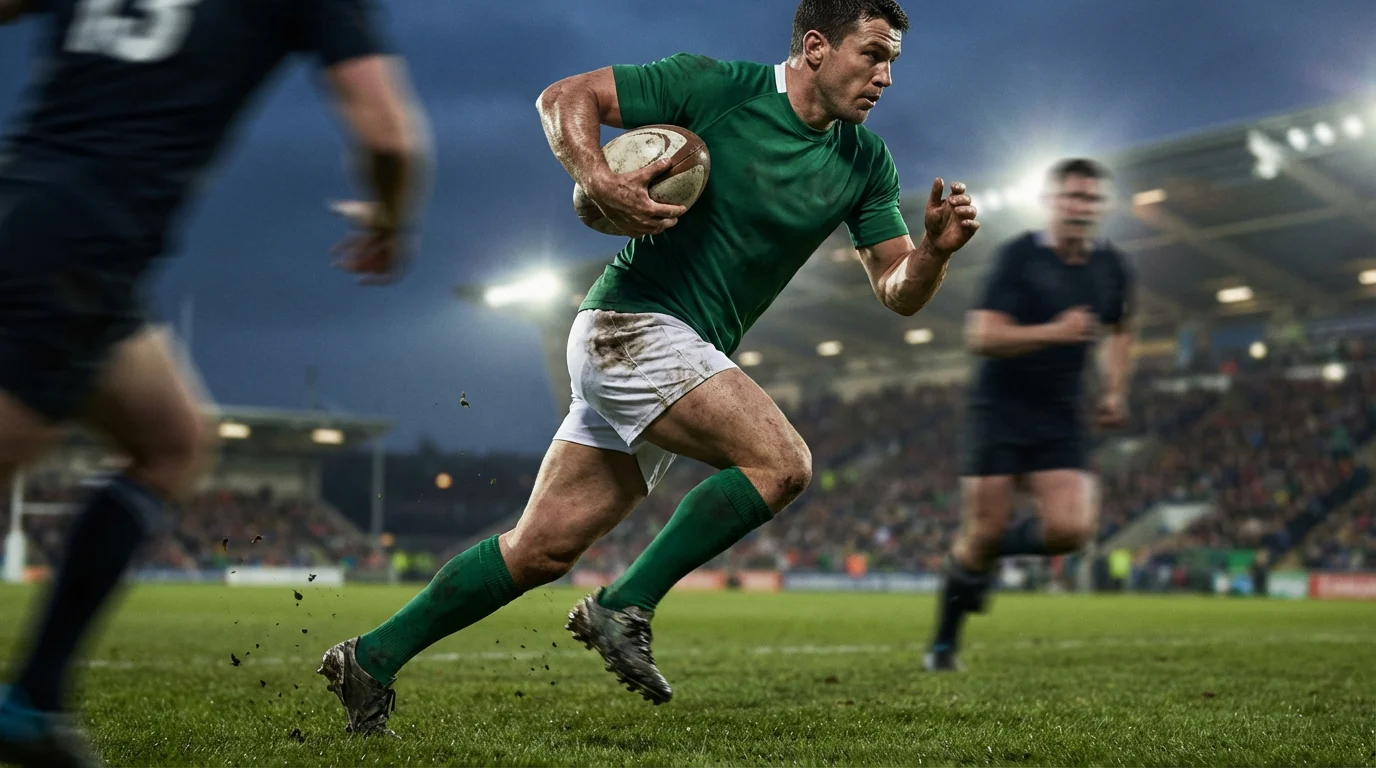
Live betting on rugby union is where preparation meets opportunity in real time. The pre-match market gives you one chance to get your assessment right, but in-play betting offers dozens of decision points across eighty minutes, each one shaped by what is actually happening on the pitch rather than what you predicted would happen. For bettors who understand rugby’s rhythms, this is where the game within the game gets interesting. See also our in-play page.
Why Rugby Union Suits In-Play Betting
Not every sport is built for live betting. Football can go ninety minutes without a meaningful event. Tennis has natural breaks that bookmakers use to reprice efficiently. Rugby union occupies a sweet spot: the game produces regular scoring events, significant momentum swings, and rule-specific situations that temporarily transform the contest. All of these create windows where the live odds are slower to adjust than the on-field reality.
The structure of rugby helps too. Eighty minutes of play, split into two halves with a guaranteed break, gives you multiple phases to assess team performance. A side that dominated territory in the first twenty minutes but only scored one try might look threatening on the stats sheet, but if their lineout is misfiring and they have already missed two penalty kicks, the scoreboard tells a different story. In-play betting rewards the bettor who watches the match rather than the one who watches the odds.
Rugby’s scoring system also creates natural in-play opportunities. Unlike football, where a single goal can settle a match, rugby’s multi-point scoring events mean that deficits are regularly overturned. A team trailing by 14 points at half-time is far from beaten in rugby; two converted tries and they are level. This comeback potential means that live odds on trailing teams are often more generous than they should be, particularly when the deficit looks worse than the actual flow of the game suggests.
Sin Bins: The Golden Window
The yellow card is the single most impactful in-play betting trigger in rugby union. When a player is sent to the sin bin for ten minutes, the offending team plays with fourteen men, and the effect on the match is dramatic and predictable. The team with the numerical advantage scores, on average, significantly more points during a sin bin period than during normal play. Some studies have estimated the average points swing during a yellow card at roughly 5-7 points in favour of the team with fifteen players.
For in-play bettors, the key is speed. Bookmakers know that sin bins affect scoring, so they adjust their live lines as soon as the card is shown. But the adjustment is often incomplete, particularly in the first sixty seconds after the decision. If you are watching the match live and see a yellow card coming, such as repeated infringements near the try line or a cynical breakdown penalty, you can sometimes get your bet on before the card is officially shown and the market reacts.
The type of sin bin matters too. A yellow card for a technical offence at a scrum on halfway is less exploitable than one for repeated infringements inside the 22. The field position at the time of the card, the quality of the attacking team’s set-piece, and how many minutes remain in the bin all influence the likely scoring outcome. A sin bin in the 60th minute to a team already under pressure is far more damaging than one in the 10th minute when both sides are still feeling their way into the match.
Momentum Shifts and When to Strike
Rugby matches rarely unfold in a straight line. Most contests feature identifiable momentum shifts where one team seizes control for a period of ten to fifteen minutes, often scoring multiple times before the opposition can regroup. Recognising these shifts as they develop, rather than after they have played out, is the central skill of in-play rugby betting.
Several on-field indicators signal a momentum shift before it shows up on the scoreboard. A sudden increase in penalties conceded by one side suggests they are under physical pressure and resorting to illegal means to slow the ball. A team winning quick lineout ball on the opposition’s throw is a sign that the set-piece balance has tipped. A scrum that starts marching forward against the head indicates pack dominance that will likely translate into territory and scoring opportunities.
The in-play bettor’s job is to translate these observations into market positions before the bookmaker’s algorithm catches up. Live odds models are sophisticated, but they rely primarily on scoreboard data, time elapsed, and historical patterns. They cannot watch the match. They cannot see that a team’s fly-half has switched to a more attacking kicking game, or that the defensive line has suddenly started rushing up and leaving gaps in the wider channels. These are visual cues that give the attentive bettor a genuine informational edge over the live pricing model.
Timing Your Wagers: The Clock as a Variable
In pre-match betting, time is irrelevant. You back your selection and wait for the final whistle. In-play betting introduces the clock as an active variable that changes the value of every position on the board. A 7-point lead in the 5th minute is a completely different proposition from a 7-point lead in the 75th minute, and the live odds should reflect that difference. When they do not, you have a betting opportunity.
The first twenty minutes of a rugby match are typically the most volatile period for live odds. Teams are still finding their rhythm, and early scores can swing the market dramatically. A converted try in the opening five minutes shifts the live handicap by roughly 7 points, but the actual probability of the match outcome has barely changed at that stage. If you believe the early score flatters the attacking team or understates the quality of the team that conceded, the immediate aftermath of an early try is often a productive time to enter the market on the other side.
The period between the 50th and 65th minutes is another window worth monitoring. This is when coaches make their substitutions, fresh legs enter the game, and fatigue starts to affect decision-making. In professional rugby, the impact bench can transform a match. The Springboks have built their entire game model around a second-half surge powered by front-row replacements who are essentially starting-calibre players. If you know a team’s bench is significantly stronger than their opponent’s, the 50th minute is often the optimal time to back them on a live handicap, particularly if they are trailing or level.
The final ten minutes are treacherous for in-play bettors. The live market becomes extremely thin, spreads widen, and a single score can settle the match. Unless you have a very strong read on the closing stages, the risk-reward balance in the last ten minutes usually favours staying out of the market rather than chasing a position.
Scoreboard Pressure and Tactical Shifts
One of the most underappreciated factors in live rugby betting is how the scoreboard changes team behaviour. A team that is leading comfortably in the second half will often shift to a conservative, territory-based game designed to protect the lead. They kick more, take fewer risks in contact, and accept penalties rather than running the ball from deep. This tactical contraction suppresses further scoring and tends to make the over on the total points line a poor bet in the closing stages.
Conversely, a team that is chasing the game becomes increasingly willing to take risks that they would never consider in a tight contest. They keep the ball in hand from deep positions, attempt offloads in contact, and chase the intercept pass rather than making the safe tackle. This desperation attacking creates two simultaneous effects: a higher chance of quick scores if the gambles come off, and a higher chance of catastrophic defensive errors if they do not. Both outcomes can be exploited in-play, depending on which side of the equation you believe the match is heading toward.
The scoreboard also affects referees, though this is rarely discussed openly. In tightly contested matches, there is a tendency for the penalty count to gravitate toward the team that is trailing. Whether this is genuine bias or simply a reflection of the leading team’s willingness to infringe to protect their advantage is debatable, but the effect on the match is the same. More penalties mean more territory, more lineout opportunities near the try line, and more chances for the trailing team to claw back into the contest. Factoring this into your live betting is not cynicism; it is pattern recognition.
When the Weather Changes at Half-Time
Here is a scenario that pre-match bettors cannot account for but in-play bettors can exploit: the weather changes during the match. A game that kicks off in sunshine and dry conditions can become a completely different contest if rain arrives at half-time. The ball becomes slippery, handling errors multiply, and the game shifts toward a kicking and set-piece battle. If you backed the over on total points before the match based on dry conditions, the arrival of rain fundamentally changes your position and the live market should reflect that shift.
Smart in-play bettors monitor weather radar alongside the match broadcast. A rain front moving across the ground at the 50th minute is actionable information. If the live total points line has not adjusted for the incoming weather, there is a window to back the under before the conditions deteriorate and the bookmaker catches up. This is a niche tactic, but it illustrates the broader principle of in-play betting: any information you have that the market does not, or has not yet processed, is an edge.
Stop Watching the Odds. Start Watching the Match.
The biggest mistake in-play bettors make is staring at their screens instead of watching the game. The live odds are a lagging indicator. They tell you what has already happened, adjusted by a model that cannot see what you can see. The forward pack that is visibly tiring. The fly-half who keeps glancing at the big screen instead of his options. The defensive system that has stopped communicating. These are the signals that precede scoreboard changes, and they are available to anyone with a screen and the knowledge to interpret what they are watching.
In-play rugby betting is not about reacting faster than the algorithm. It is about seeing things the algorithm cannot. The ten minutes you spend watching a match before placing a single bet are worth more than the ten seconds you spend trying to click faster than the next person. Patience, combined with genuine rugby knowledge, is the only sustainable edge in live markets. In-play live strategies on rugby union betting.
