


The Rugby World Cup represents the pinnacle of international rugby union, a tournament that captivates fans worldwide and generates betting interest that dwarfs any other rugby event. Every four years, the world’s best rugby nations converge for six weeks of intense competition culminating in a final that regularly attracts television audiences exceeding half a billion viewers. For bettors, the World Cup offers a unique combination of deep markets, extensive historical data, and sufficient time between matches to conduct thorough analysis.
The 2027 Rugby World Cup in Australia promises to deliver exceptional betting opportunities. The tournament expands to 24 teams for the first time, creating new pool dynamics and additional matches for wagering. Australia’s hosting duties add the intriguing element of home advantage for a traditional rugby power seeking to reclaim glory on their own soil. The defending champions South Africa will attempt something no nation has achieved in the professional era: three consecutive World Cup victories.
This guide prepares you for comprehensive World Cup betting across every market and tournament phase. You will understand the expanded format, evaluate the leading contenders, learn strategies specific to World Cup wagering, and develop a portfolio approach that maximizes value across the six-week spectacle. Whether you prefer outright futures, match-by-match betting, or player proposition markets, the Rugby World Cup rewards those who prepare thoroughly and execute strategically.
Rugby World Cup Format Explained
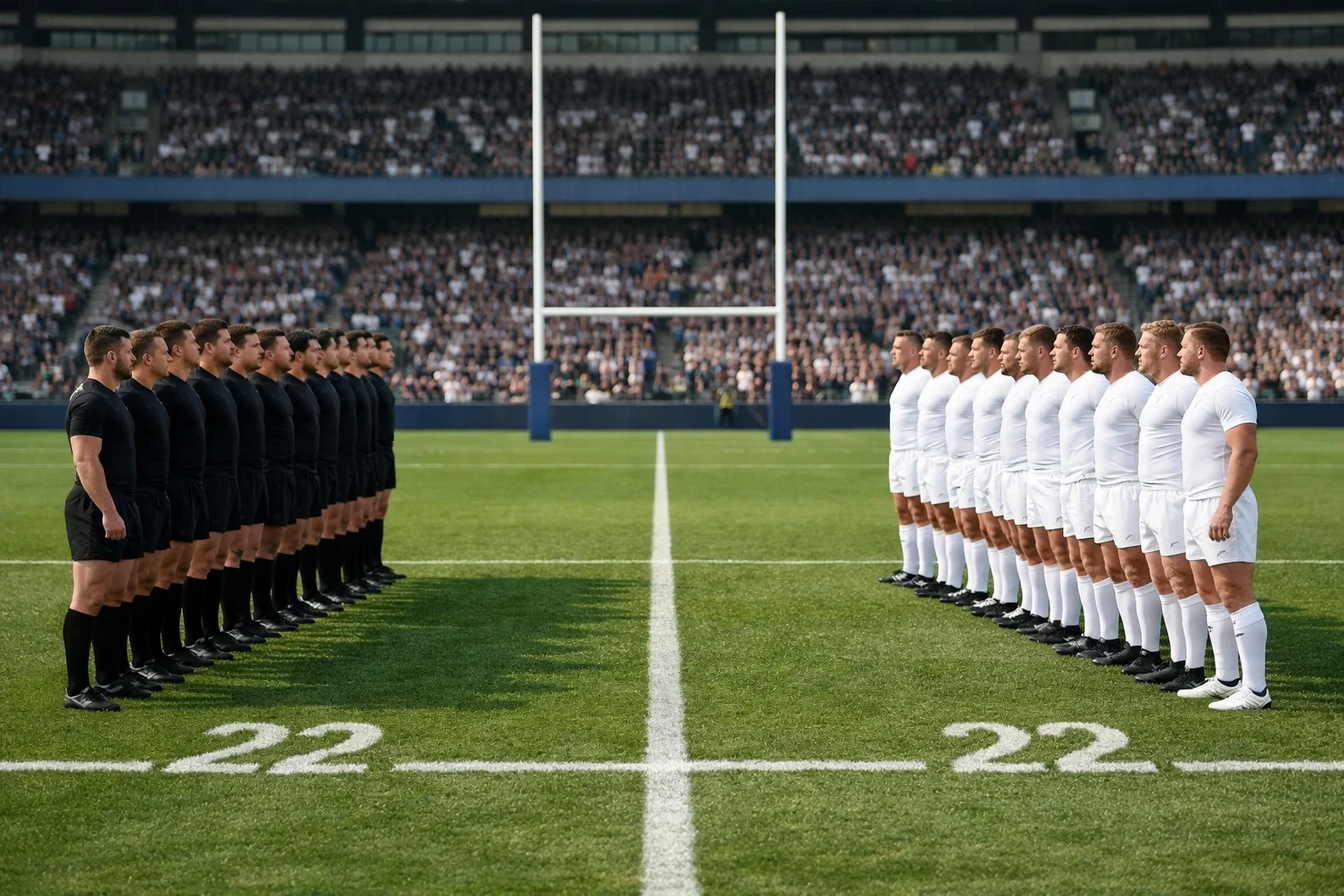
The 2027 Rugby World Cup introduces a 24-team format, expanding from the 20-team structure that has defined the tournament since 1999. This expansion brings four additional nations into the competition, broadening rugby’s global footprint while creating new betting considerations around the increased number of matches and modified pool structure. Understanding the format provides essential context for all World Cup betting decisions.
The pool stage divides 24 teams into six pools of four teams each. Every team plays the other three teams in their pool once, producing 36 pool stage matches across the opening three weeks. The top two teams from each pool advance to the knockout rounds, meaning 12 teams progress compared to eight under the previous format. This expanded qualification pathway increases the number of meaningful pool stage matches and creates additional betting opportunities around teams fighting for second place in competitive pools.
Pool stage matches operate under standard rugby union scoring with a bonus point system that influences final standings. Teams earn four points for a win, two for a draw, and zero for a loss. A bonus point is awarded for scoring four or more tries, and another bonus point for losing by seven points or fewer. These bonus points create tactical situations where trailing teams continue attacking late in matches, affecting handicap and totals markets beyond simple win-loss considerations.
The knockout stage begins with a round of 16 featuring all 12 pool qualifiers plus four best third-placed teams. Quarterfinals, semifinals, and the final follow in successive weekends, with a bronze medal match preceding the final. Single-elimination format means one loss ends a team’s tournament, creating pressure dynamics that differ substantially from pool play. Knockout matches that finish level after 80 minutes proceed to extra time, and if still tied, a kicking competition determines advancement.
Australia hosts the 2027 tournament with matches spread across major cities including Sydney, Melbourne, Brisbane, Perth, and Adelaide. The geographic spread creates travel considerations for teams and scheduling factors that influence recovery time between matches. Key dates place the opening match in early September, pool stage completion in early October, and the final in late October. This timeline allows bettors to engage across nearly two months of continuous World Cup action.
Rugby World Cup Betting Markets
Outright Winner
The outright winner market attracts more betting volume than any other World Cup proposition. Bookmakers open this market years before the tournament, with prices fluctuating based on team performances in intervening competitions. The 2027 market has already established clear tiers: South Africa and New Zealand as co-favorites, Ireland and France in the next tier, England and Australia grouped behind them, and longer prices available on emerging nations and potential dark horses.
Ante-post outright betting offers value opportunities unavailable once the tournament begins. Prices typically compress on favorites as the World Cup approaches because casual bettors flood in supporting obvious contenders. Shrewd bettors who identify value early and lock in prices before this compression occurs gain mathematical advantages that compound across the tournament. A team available at 8.00 two years out might shorten to 4.00 by tournament kickoff, representing substantial value capture for early movers.
The expanded 24-team format marginally increases upset probability in the knockout rounds by introducing more matches where established powers face determined underdogs. This variance expansion slightly lengthens true odds on favorites while shortening odds on the broader contender field. Bettors should factor this structural change into their outright assessments rather than relying purely on historical World Cup odds patterns from the 20-team era.
Pool Winners
Pool winner markets offer opportunities to back teams at shorter odds than outright prices while accepting limited upside. Identifying which pool favorites will top their group seems straightforward, but the bonus point system creates complications. A dominant team might win all three pool matches but finish second if another team accumulates more bonus points through high-scoring victories.
Pool composition analysis drives these markets. Some pools feature one clear favorite and three weaker opponents; others contain two or even three genuine contenders who will fight for top position. The draw for the 2027 tournament will clarify these dynamics, but historical patterns suggest at least two pools will feature genuinely competitive races between established nations. These competitive pools offer value on slight underdogs to top their group.
Timing pool winner bets around the draw maximizes information while capturing value before markets fully adjust. Immediately following the draw, sharp bettors identify pools where the composition favors specific outcomes, often finding value before bookmakers fully recalibrate their assessments. This window typically lasts only hours or days before markets reach efficient pricing.
Top Tournament Tryscorer
The tournament’s top tryscorer market spreads probability across dozens of players, creating long odds on individual selections. Wingers and back-three players from teams expected to reach the latter stages dominate this market, combining try-scoring positions with maximum match opportunities. A player whose team exits in the pool stage faces a significant handicap regardless of individual ability.
Tournament progression probability should weight your top tryscorer assessment heavily. A winger from South Africa or New Zealand who reaches the final plays seven matches, while an equally talented finisher from a team eliminated in the quarterfinals plays only five. This two-match differential in opportunity substantially affects expected try totals and should compress odds on players from likely finalists relative to those from likely early exits.
Historical patterns show that top tournament tryscorers typically come from semifinalist nations and score between seven and ten tries. The expanded format in 2027 adds one potential knockout match for the leading teams, possibly pushing the winning total slightly higher. Players who score multiple tries in a single pool match often emerge as leaders, so identifying which fixtures might produce individual try-scoring explosions provides analytical edge.
Top Points Scorer
Goal-kickers dominate the top points scorer market because penalties and conversions accumulate faster than tries for consistent kickers on successful teams. The player must both kick accurately and play for a team that creates numerous kicking opportunities through winning matches and scoring tries. This dual requirement focuses the market on kickers from genuine World Cup contenders.
Identifying likely top points scorers requires assessing which contenders rely on goal-kicking versus try-scoring for their attacking output. Teams that struggle to convert territorial dominance into tries but kick penalties effectively will see their kickers accumulate points steadily. Conversely, teams with explosive attacking play might outscore opponents through tries, leaving their kickers with only conversions that produce fewer total points.
Tournament scheduling affects kicking consistency in ways that influence this market. Kickers who play every match for teams reaching the final face grueling workloads that may compromise accuracy in later rounds. Fresh legs from rotation patterns, though rare for first-choice kickers, could provide advantages in knockout rounds. Tracking kicker workloads and success rates across the tournament helps assess whether early leaders will maintain their margins.
To Reach Final and Semi-Final
Stage progression markets offer intermediate positions between outright winner bets and match-by-match wagering. Backing a team to reach the final requires them to win their pool, navigate the round of 16, and win their quarterfinal and semifinal without stipulating they win the tournament itself. This reduced requirement produces shorter odds while maintaining meaningful upside.
These markets prove particularly valuable for teams you assess as strong but not quite tournament favorites. A team like France might offer 6.00 to win the tournament but 2.50 to reach the final. If your assessment gives France roughly 45 percent probability of reaching the final, the 2.50 price represents strong value even though you consider them unlikely outright winners. This market alignment between your probability assessment and available odds should drive selection.
Semi-final qualification markets offer even higher probability outcomes at correspondingly shorter odds. Teams need only win their pool and one knockout match to qualify for the semifinal, achievable for any top-eight ranked team with reasonable draw fortune. These markets suit bettors seeking higher probability returns who accept reduced potential profit in exchange for increased winning frequency.
Match Betting Throughout
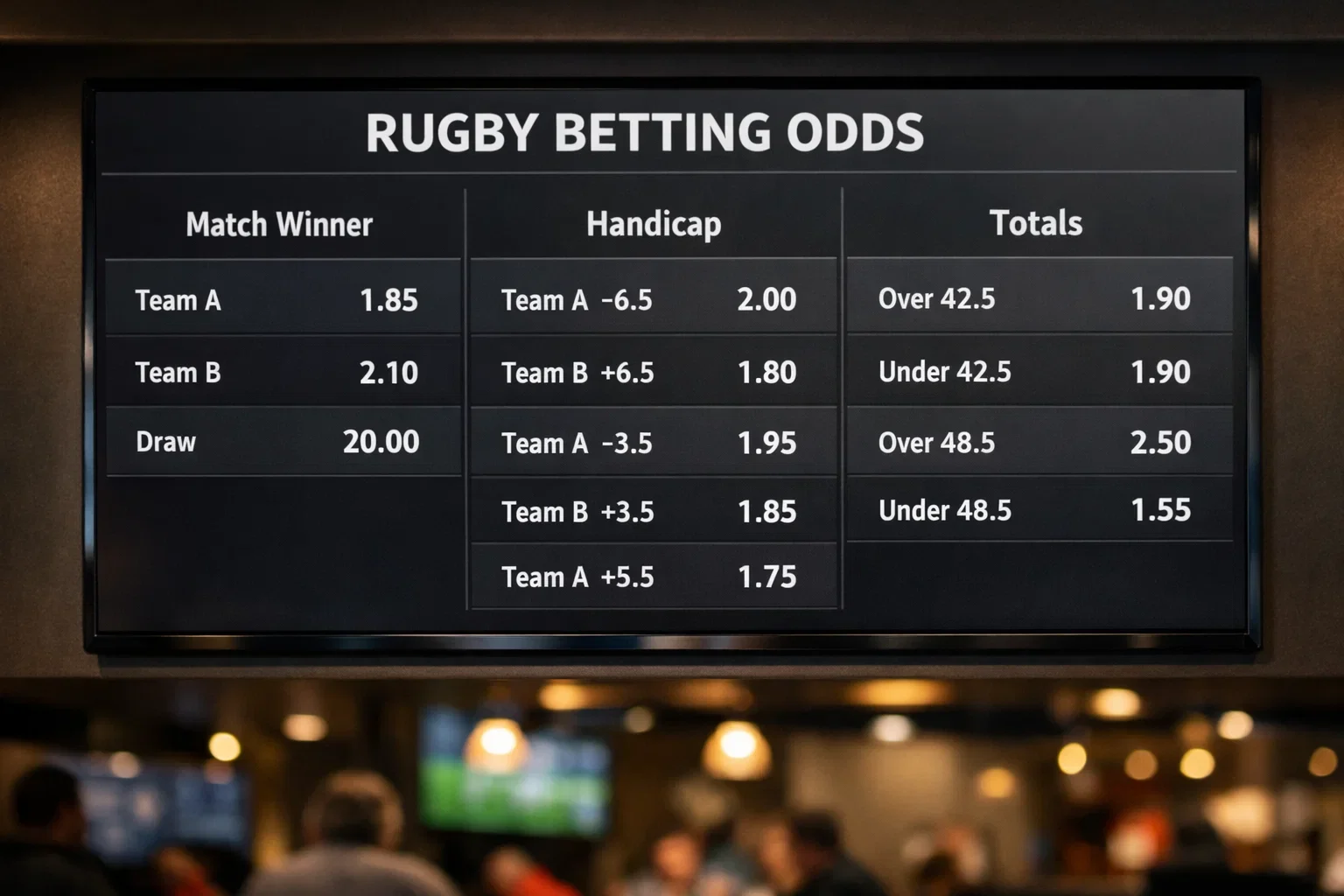
Individual match betting provides the tournament’s highest volume markets, with every pool and knockout match generating extensive wagering. Match winner, handicap, totals, tryscorer, and numerous other markets appear for each fixture, creating continuous betting opportunities across six weeks. Bettors who lack strong outright views can still engage profitably through match-by-match analysis.
Pool stage match betting benefits from extensive preparation time. With fixtures known months in advance, bettors can research each matchup thoroughly, tracking team news, analyzing historical meetings, and developing informed opinions before odds even open. This preparation time represents an advantage over live tournament phases where analysis must occur rapidly between matches.
Knockout match betting introduces psychological factors absent from pool play. The pressure of elimination affects team performance unpredictably, sometimes lifting underdogs to unexpected heights and sometimes causing favorites to underperform their ability. Incorporating pressure assessment into knockout match analysis improves accuracy beyond pure form-based projections.
Contenders Analysis
South Africa: Defending Champions
South Africa enters the 2027 World Cup as two-time defending champions following victories in 2019 and 2023, the only nation to achieve back-to-back titles in the professional era. Their forward-dominant style, exceptional defense, and big-game mentality make them formidable opponents regardless of circumstances. The Springboks’ success formula has proven remarkably consistent: control territory, win collisions, execute under pressure.
The challenge facing South Africa involves maintaining their championship level across another four-year cycle. Key players from the 2023 triumph will be four years older, with some approaching or exceeding 34 years of age. The Springbok system emphasizes collective performance over individual brilliance, which should facilitate regeneration, but replacing proven World Cup winners with untested alternatives introduces uncertainty.
Betting on South Africa requires accepting short prices for proven capability. Their odds will likely sit around 4.00 to 5.00, reflecting both their track record and the difficulty of achieving three consecutive titles. Value on South Africa might appear in specific markets like reaching the final, where their knockout pedigree makes them more reliable than outright prices suggest. Conversely, backing against South Africa at certain tournament stages could offer value when their prices compress excessively on reputation.
New Zealand: Most Successful Nation
New Zealand has won three Rugby World Cups and reached the knockout stages of every tournament in history. The All Blacks’ reputation as tournament specialists persists despite their failure to reach the final in 2023. Their attacking brilliance, rugby intelligence, and depth across positions make them permanent contenders regardless of the specific squad assembled for any given tournament.
The period since 2023 has seen New Zealand cycling through playing personnel while maintaining their characteristic style. New faces have emerged in key positions, and by 2027 the All Blacks will likely field a substantially different lineup than their 2023 edition. This regeneration typically produces initial inconsistency before coalescing into tournament-ready cohesion. Historical patterns suggest New Zealand times their form cycles to peak at World Cups, making their intervening results somewhat misleading.
Betting value on New Zealand depends on market perception of their current cycle position. If public memory overweights their 2023 disappointment and undersells their recovery, odds might drift longer than warranted. Conversely, if nostalgia for All Black dominance inflates expectations beyond their actual 2027 capabilities, fading New Zealand in certain markets could offer value. Continuous assessment of their form trajectory as the tournament approaches guides this calibration.
Ireland: World Number One
Ireland has established themselves as the world’s top-ranked team through consistent performance in the Six Nations and autumn internationals. Their structured game plan, exceptional coaching, and golden generation of players have produced results that demand respect. What Ireland lacks is World Cup success: semifinal exits remain their ceiling, a psychological barrier that bookmakers and bettors weigh against their regular-season dominance.
The 2027 tournament represents Ireland’s clearest opportunity to convert their number one ranking into World Cup glory. Their core players will be at optimal ages, their system will be deeply embedded, and their experience from previous World Cup near-misses should inform better big-game execution. Whether Ireland can overcome their knockout stage struggles remains the central question for anyone assessing their chances.
Betting on Ireland means accepting a probable disconnect between regular performance and World Cup outcomes. If you believe Ireland’s failures reflect correctable issues rather than inherent limitations, their odds offer value relative to their quality. If you view World Cup knockout rugby as a distinct discipline where Ireland’s style struggles, opposing them in later rounds might prove profitable. Your assessment of this specific question should drive Ireland-related betting decisions.
France: Consistent Challengers
French rugby has stabilized after years of inconsistency, producing a team capable of challenging for major honors. Their hosting of the 2023 World Cup saw them fall agonizingly short in the quarterfinals, but the quality demonstrated throughout that tournament confirmed their status among the elite. By 2027, France will have integrated lessons from that disappointment while maintaining their talented core.
The French game combines forward power with backline creativity in ways that prove difficult to defend when firing. Antoine Dupont at scrum-half provides the catalyst for their attack, and the supporting cast across positions matches any nation. Home crowd advantage does not apply in Australia, but France’s experience playing in Southern Hemisphere conditions through various tours and competitions prepares them adequately.
Betting on France requires assessing their volatility. French rugby produces magnificent highs and inexplicable lows with frustrating unpredictability. This variance might appeal to bettors seeking longer odds on a team capable of beating anyone on their day. Alternatively, the same volatility might warrant caution about backing France in markets requiring sustained performance across multiple matches. Matching your betting approach to French volatility characteristics improves outcome alignment.
England: Northern Hemisphere Hope
England’s World Cup record includes one victory and three final appearances, establishing them as consistent contenders despite recent struggles to match Southern Hemisphere powers. The 2027 tournament arrives after a period of transition that has seen coaching changes and generational player turnover reshape the squad. Whether this reconstruction produces a coherent World Cup contender remains uncertain.
English rugby resources exceed any other nation through Premiership wealth and player depth. These advantages should eventually manifest in World Cup success, though converting resource superiority into tournament victory has proven difficult. The England squad selected for 2027 will benefit from accumulated experience and hopefully settled selection patterns after years of experimentation.
Betting value on England typically exists when their odds drift following poor results in less important competitions. Public perception reacts strongly to English rugby performances, creating odds volatility that exceeds actual form fluctuation. Identifying when English odds have overcorrected downward following disappointing performances offers opportunities that disappear once the tournament approaches and attention focuses minds.
Australia: Home Advantage
Australia hosts the 2027 World Cup, providing home advantage last enjoyed by a World Cup winner when England triumphed in 2003. The Wallabies have underperformed their historical standards in recent years, but home crowd support, familiar conditions, and scheduling advantages could elevate their performance substantially. The host nation factor should not be dismissed when assessing Australian prospects.
The Australian rugby system has undertaken significant restructuring aimed at producing a competitive 2027 team. Whether these reforms translate into improved results by tournament time depends on development trajectories that remain uncertain in 2026. The potential exists for Australia to dramatically exceed recent performances when playing before home crowds in a tournament they have prioritized above all else.
Betting on Australia means assessing home advantage magnitude and reform success probability. If you believe home advantage provides a significant boost and restructuring efforts will bear fruit, Australian odds around 8.00 to 10.00 might offer value. If you view home advantage as marginal and remain skeptical about improvement claims, those same odds might represent poor value despite the hosting status.
Dark Horses
Beyond the established contenders, several nations could produce surprise runs that upset betting markets. Argentina has demonstrated giant-killing capability in previous World Cups, reaching the semifinal in 2015 and consistently challenging top-tier opponents. Their physical style and tournament experience make them dangerous opponents for anyone. Japan’s continued development and potential home support in Australia due to geographic proximity and substantial expatriate population could fuel another fairy tale run. Scotland, Wales, and Fiji all possess the talent to defeat favorites on any given day, though sustaining that level across a tournament knockout stage presents a higher bar.
Dark horse betting requires accepting long odds with corresponding low probability. A 25.00 selection implies roughly four percent winning probability, meaning 24 of 25 such bets will lose. Value exists only when your assessed probability exceeds the implied probability, not simply when you identify a team capable of theoretically winning. Distinguish between teams that could win and teams whose odds understate their actual chances.
Rugby World Cup Betting Strategies

Ante-Post Betting Value
The best ante-post value typically appears in the twelve to eighteen months before the tournament. Odds at this stage reflect reasonable assessments of likely contenders without the compressed pricing that emerges as casual bettors enter the market closer to kickoff. Identifying teams whose trajectories point toward improvement by tournament time captures value that disappears once those improvements become obvious.
Price movements between ante-post and tournament betting follow predictable patterns. Favorites shorten as public money arrives; long shots drift unless generating genuine form that attracts attention. Sharp bettors position themselves ahead of these movements, backing teams before compression and opposing teams before drift. Tracking historical price movements from previous World Cups calibrates expectations for how 2027 markets will evolve.
Ante-post risks include injury to key players and form deterioration between bet placement and tournament kickoff. A team backed at 6.00 eighteen months out might lose their captain to injury, seeing their true odds lengthen beyond the price obtained. This risk argues for some portfolio diversification rather than concentrating entire ante-post exposure on a single selection.
Pool Stage Betting
Pool stage betting offers extensive match volume with generally predictable outcomes in mismatched fixtures. Heavy favorites face tier-two nations with odds reflecting minimal upset probability, directing value-seeking bettors toward handicap and totals markets rather than match winners. The expanded 24-team format increases the number of mismatch pool fixtures, providing more opportunities for handicap betting on dominant favorites.
Dead rubber dynamics affect late pool stage betting significantly. A team that has already secured pool advancement might rest key players against opponents fighting for their tournament lives. These motivation asymmetries create value on underdogs covering handicaps or potentially winning outright against second-string lineups. Tracking advancement scenarios and anticipating team selection approaches identifies these opportunities.
Bonus point incentives influence late-game behavior in ways that affect totals and handicap markets. A team needing a bonus point to secure pool position will attack aggressively late even when the match result is secure. Conversely, a team protecting a narrow lead with advancement assured might play conservatively, reducing final margins. Understanding these incentive structures improves pool stage betting accuracy.
Knockout Stage Betting
Knockout rugby produces different dynamics than pool play, and betting approaches must adjust accordingly. The pressure of elimination encourages conservative tactics, particularly from underdogs who sense opportunity in keeping matches tight. Favorites often fail to cover large handicaps in knockout matches that their pool stage performances might suggest they would.
Historical knockout data shows tighter margins than pool stages across World Cup history. Semifinals and finals produce particularly close scorelines as evenly matched teams cancel out each other’s strengths. This pattern suggests systematic value on underdogs and unders in late-tournament knockout matches, particularly when markets overreact to pool stage blowouts.
Live betting during knockout matches captures opportunities that pre-match markets cannot price. Momentum shifts, early scores, and pressure reactions create value throughout knockout fixtures. Teams trailing at halftime but demonstrating competitive performance might offer attractive comeback prices. Teams leading but showing vulnerability might represent live fade opportunities. Active engagement during knockout matches maximizes the value extraction available.
Historical World Cup Betting Trends

Favorites have won the Rugby World Cup more often than not, but upsets occur with sufficient frequency to reward underdog bettors. Seven of ten World Cups have been won by the pre-tournament favorite or second favorite, while three have produced winners outside the top two in betting markets. This distribution suggests favorites deserve respect without warranting automatic backing at any price.
Scoring patterns compress in knockout rounds compared to pool stages. The average pool stage match produces more points than the average knockout match across World Cup history. This pattern holds particularly strongly in semifinals and finals, where defensive pressure and conservative tactics suppress scoring. Totals bettors should adjust expectations downward for knockout fixtures and seek value on unders when markets fail to reflect this compression.
Host nation performance varies considerably across World Cup history. England won as hosts in 2003, but France lost the 2007 final at home, and Japan reached the quarter-finals as hosts in 2019 before losing to eventual champions South Africa. Home advantage provides benefits but does not guarantee success. Australia’s hosting in 2027 should inform but not dominate your assessment of their prospects. See also the RWC 2027 preview.
World Cup Specific Factors
Rest days between matches affect team performance in ways that pre-tournament betting cannot fully anticipate. The tournament schedule provides varying recovery periods that advantage some teams over others. A team playing Saturday and then the following Friday faces less recovery than one playing Saturday and the following Sunday. These scheduling inequities compound across the tournament, particularly affecting teams that advance deep into the knockout rounds.
Travel considerations within Australia create advantages for teams based in certain cities. Teams headquartered in Sydney face shorter journeys to matches in Brisbane than teams based in Perth traveling to Adelaide. Tournament organizers attempt to balance these factors, but perfect equity proves impossible with 24 teams spread across a continent-sized nation. Tracking team bases and match allocations identifies scheduling advantages and disadvantages.
Player workload management becomes critical as tournaments progress. Teams with deeper squads can rotate players during pool matches, preserving freshness for knockout rounds. Teams relying on narrow groups of key players accumulate fatigue that manifests in later rounds. Assessing squad depth and rotation strategies helps predict which teams will maintain performance levels throughout the six-week tournament.
Rugby World Cup 2027 Betting Summary and How to Build Your Betting Portfolio

Portfolio approaches distribute risk across multiple bets rather than concentrating exposure on single outcomes. A World Cup betting portfolio might include an outright selection, several stage progression bets, key match positions, and player proposition wagers. This diversification accepts that individual components will lose while aiming for overall portfolio profitability.
Tournament-long strategy requires planning before the first match and discipline throughout. Decide your total World Cup betting budget, allocate portions to different market types, and establish rules for adjusting positions as the tournament unfolds. This precommitment prevents emotional decisions during the tournament that deviate from sound strategy.
Managing multiple bets requires tracking all positions and their interactions. A portfolio with conflicting bets, such as outright selections on different teams, contains hedging elements that may or may not be intentional. Understanding how your various bets interact helps optimize overall portfolio construction and avoid unintentional exposure concentrations or hedges.
The 2027 Rugby World Cup offers six weeks of premium betting opportunities for those who prepare adequately. Understanding the expanded format, assessing the leading contenders, applying tournament-specific strategies, and building coherent betting portfolios positions you for sustained engagement and potential profitability. The world’s best rugby nations will compete for the ultimate prize, and bettors who approach the tournament with knowledge and discipline will find value throughout the spectacle. Rugby World Cup 2027 on rugby union betting.
